.svg)


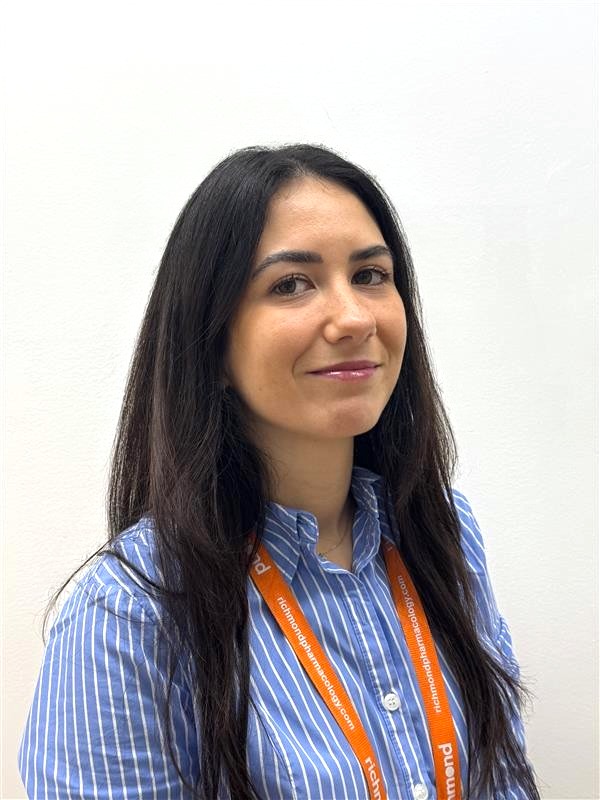
Leadership Spotlight shares insight into the leaders behind our teams and the work they deliver across Richmond. These features highlight how our organisation operates, the expertise within our teams, and the leadership that supports the safe and effective delivery of clinical research.
In this edition, we spotlight Carolina Pacheco de Amorim, who leads Acute Clinical Management (ACM) — the team responsible for emergency preparedness and the rapid treatment of patients who become suddenly unwell during studies.
Background and career journey
Carolina joined Richmond in June 2024 with over ten years of experience in emergency and critical care. Born and trained in Portugal, she began as a dual‑qualified Adult and Paediatric Nurse before moving to London to progress her clinical career.
At the Royal Brompton Hospital, she worked in Intensive Care and Recovery, advancing into a Deputy Manager role and gaining extensive experience in acute deterioration and emergency response. During this time she completed Paediatric, Adult, and Cardiac Life Support courses, becoming deeply involved in clinical education. She also trained as a simulation instructor and went on to establish an in‑situ simulation programme within her department. One of its outputs, a hand hygiene improvement project, was accepted for presentation at the IPC Conference in Geneva, where it was selected as one of only ten articles featured on the international tour.
Carolina then joined Chelsea and Westminster Hospital as a Senior Resuscitation Officer, attending a wide range of emergencies and teaching on programmes such as ALS (Advanced Life Support),EPALS (European Paediatric Advanced Life Support), ILSi (Immediate Life Support Instructor), and GIC (Generic Instructor Course). After a decade in acute NHS care, she joined Richmond to apply her emergency expertise within research.
Role and responsibilities
Acute Clinical Management ensures Richmond can prevent, identify, and respond to clinical emergencies. Key responsibilities include:
- Emergency training and simulation
- Equipment checks and readiness
- Daily clinical support
- Cannulation and ward safety cover
- Rapid emergency response
The team provides both preventative systems and coordinated action when emergencies occur.
Approach to daily work
Carolina begins each day by checking emergency equipment and collecting her emergency bleep. When not running Immediate Life Support courses, she delivers training, supports wards with cannulation, oversees simulations, and provides general clinical safety cover.
Because emergencies are unpredictable, she maintains high visibility across the unit, using daily contact with teams to support readiness and maintain strong safety standards.
What makes ACM successful
ACM’s success comes from its ability to combine clinical expertise, rapid response capability, and proactive system‑level safety work. The team maintains clear and continuous communication with clinical staff, ensures emergency pathways and equipment remain ready at all times, and provides hands‑on support that strengthens day‑to‑day clinical practice. Their work underpins Richmond’s emergency preparedness, enabling the organisation to respond confidently and consistently to clinical deterioration and unexpected events.
A challenge the team solves that people might not realise
ACM frequently supports difficult or urgent cannulations. The teams expertise in this area helps prevent delays to study procedures, reduces participant discomfort, and provides essential support to clinical teams. These small, routine interventions have a significant impact on the participant experience.
Developing and supporting people
When hiring or developing staff, Carolina looks for enthusiasm for emergency care, strong teaching instincts, curiosity, and calmness under pressure. Because ACM blends technical skills with education and leadership, an interest in developing others is essential.
Looking ahead
Carolina aims to expand ACM’s internal and external education programme. Alongside Immediate Life Support training, she is working towards offering further accredited courses, including ILSi, which prepares clinicians to teach life support. This will strengthen team confidence and broaden Richmond’s contribution to emergency care training.
Proud moments
A highlight has been delivering Immediate Life Support training to 86 healthcare professionals in 2025, including 50 external attendees — a milestone that reflects ACM’s growing impact across the organisation and wider clinical community.
Advice for those considering this field
Carolina encourages aspiring clinicians to build acute care experience in settings such as A&E, theatres or ICU, where essential judgement and emergency response skills are developed.
Outside of work
Carolina organises monthly sighthound dog walks in Kensington Gardens, bringing together owners of Greyhounds, Whippets and Lurchers. Each walk raises funds for rescue organisations supporting the re-homing of former racing dogs — an initiative she first launched in Victoria Park and revived in West London post‑COVID.
.avif)